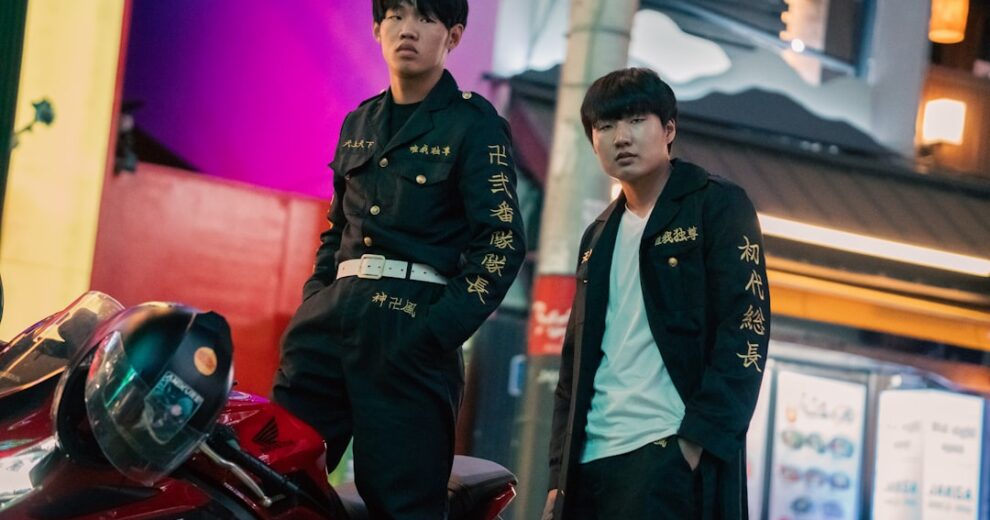
Discover every K-drama male lead archetype — from the Cold Chaebol to the Sunshine Boy — with drama examples, streaming platforms, and fan-favorite moments.
Wait — Have You Been Dating the Same K-Drama Guy Over and Over?
Okay, real talk. Have you ever finished a K-drama, immediately started another one, and realized halfway through episode three that you’ve somehow fallen for the exact same guy again? Same cold exterior, same secret tragic backstory, same inexplicable ability to make standing in the rain look like a magazine shoot? Yeah. Me too. And honestly? I’m not even mad about it.
K-drama male lead archetypes are basically their own genre at this point. Whether you’re new to Korean dramas or you’ve been binge-watching since the days when you had to wait for subtitles for three whole days (the struggle was real), you’ve definitely encountered these types. And understanding them — really understanding them — makes the whole watching experience so much richer. So let’s break down every major K-drama male lead archetype, complete with examples, streaming info, and my completely unhinged personal opinions.
Buckle up. This is going to be a long one. Grab your ramen.
The Ice Prince (aka The Cold Chaebol Who Has Feelings, He Just Won’t Admit It)
This is the OG. The blueprint. The archetype that basically built Korean drama fandom in the West. You know him. Tall, impossibly well-dressed, speaks in complete sentences with zero warmth, and will stare at the female lead for 0.3 seconds longer than necessary before looking away. That’s called emotional foreshadowing, and we eat it up every single time.
The Ice Prince is almost always a chaebol — meaning he’s heir to some massive Korean conglomerate — and his coldness is typically explained by a tragic past. Dead mom, absent dad, childhood trauma, take your pick. The formula works because the thaw is so satisfying. When he finally lets his guard down? I literally cried three times during My Love from the Star (2013, SBS, available on Viki) and I’m not apologizing for any of it.
Other iconic examples include Kim Tan from The Heirs (2013, Netflix) played by Lee Min-ho, and Gu Jun-pyo from Boys Over Flowers (2009, Netflix) — though Gu Jun-pyo is arguably more bully than Ice Prince, which brings us to a hot take: Boys Over Flowers romanticizes some genuinely terrible behavior and we should be able to love its iconic OST while also acknowledging that. There. I said it.
The Sunshine Boy (aka The One Who Deserves Everything but Gets the Second Lead Edit)
Here’s the thing — the Sunshine Boy is often the second lead, and that’s a crime against humanity. He’s warm, he’s supportive, he remembers her coffee order, he’d never stand her up in the rain. And yet. AND YET. She always chooses the brooding ice prince who forgot her birthday twice.
This archetype is the root cause of second lead syndrome — that very specific, very painful condition where you’re rooting for the wrong guy and you know you’re rooting for the wrong guy and you keep watching anyway. Seo In-guk in Reply 1997 (2012, Viki) gave us an early version of this. Jung Hae-in in Something in the Rain (2018, Netflix) is technically a main lead but has massive Sunshine Boy energy.
The Sunshine Boy archetype is also where a lot of newer Korean dramas are doing interesting things — subverting expectations by actually letting him win, or giving him his own spinoff story. Our Beloved Summer (2021, Netflix) with Choi Woo-shik plays with this beautifully, giving us a male lead who’s somewhere between sunshine and prickly cactus, and it works so well.
The Bad Boy with a Heart of Gold (The Morally Grey King)
Okay but seriously, this one is my personal weakness and I will not be taking questions. The Bad Boy archetype in K-dramas is different from Western bad boys — he’s not bad because he’s lazy or careless. He’s bad because the system failed him. He grew up hard, he made choices he regrets, and now he’s using that dangerous edge to protect the people he loves. The drama of it all!
Song Joong-ki as Vincenzo Cassano in Vincenzo (2021, Netflix) is one of the best modern versions of this archetype. He’s literally a mafia lawyer and the show doesn’t pretend otherwise, but you’re cheering for him by episode two because the show establishes very clearly who the real villains are. It’s morally grey done right.
Jang Ki-yong in My Mister — wait, no, that’s a different type. Let me not mix these up. The point is: the Bad Boy archetype works best when the writer gives him genuine complexity rather than just making him mean and calling it mysterious. Healer (2014, Viki) with Ji Chang-wook is another great example — mercenary by trade, big softie at heart, and the action sequences go absolutely hard.
The Genius Workaholic (Brilliant but Emotionally Unavailable)
This one shows up a lot in medical dramas and legal dramas, which makes sense because those settings reward his particular flavor of intensity. He’s the best in his field — the top surgeon, the sharpest prosecutor, the legendary chef — and he has absolutely no idea how to talk to people like a normal human being.
What’s interesting about this archetype is that his emotional unavailability isn’t really coldness — it’s more like he genuinely hasn’t been taught the vocabulary for feelings. He expresses love through acts of competence. He’ll perform a twelve-hour surgery to save your father and then hand you the discharge papers without making eye contact. Romantic? Surprisingly yes, in context.
Yoo Yeon-seok in Hospital Playlist (2020, Netflix) — okay, that’s an ensemble show and he’s technically not a traditional male lead, but his character Ik-jun has genius workaholic energy with warmth layered on top, and it’s genuinely one of the best character constructions in recent Korean drama history. For a more classic version, look at Hyun Bin in Secret Garden (2010, Viki) — chaebol and emotionally stunted genius, which is basically two archetypes stacked in a trench coat.
The Childhood Friend (He Loved Her First, He’ll Love Her Last)
Now let’s talk about the archetype that has ruined more of my evenings than I care to admit. The Childhood Friend is dangerous because his claim is historical. He’s not just a good guy — he’s a good guy with a decade of context. He remembers when she was seven and scared of thunderstorms. He built his entire adult life around a quiet hope that someday, somehow.
Sound familiar? Of course it does. This archetype appears in basically every coming-of-age or slice-of-life Korean series. The Reply series on Netflix (Reply 1988, Reply 1994, Reply 1997) built its entire mystery format around the Childhood Friend question: which boy from her past did she marry? And it works brilliantly because the emotional stakes feel so real.
The Childhood Friend archetype often overlaps with the Sunshine Boy in terms of audience sympathy, but there’s a key difference: the Childhood Friend has a legitimate narrative claim, not just a personality advantage. He was there. And that matters, both to the story and to us watching at 2am eating snacks we promised ourselves we wouldn’t touch.
The Enemies-to-Lovers Lead (Starts with Hate, Ends with My Whole Heart)
Hot take incoming: the enemies-to-lovers K-drama male lead is the most satisfying archetype when it’s done well, and the most exhausting when it’s done badly. The difference is whether the writers make the initial hostility feel earned and specific, or just slap two people in a room and have them be rude to each other for six episodes before a sudden personality transplant.
When it’s done well — Oh My Venus (2015, Netflix) with So Ji-sub and Shin Min-a, or What’s Wrong with Secretary Kim (2018, Netflix) with Park Seo-joon — the tension is electric. Every scene crackles. You’re waiting for the moment the armor cracks, and when it does, the payoff is enormous.
Park Seo-joon, by the way, has made an entire career out of variations on this archetype and I respect the commitment. From Fight for My Way (2017, Netflix) to Itaewon Class (2020, Netflix), he brings a specific kind of stubborn warmth to male leads that makes them feel less like archetypes and more like actual human beings you want to root for.
The Tragic Hero (He’s Doomed and We Know It and We Watch Anyway)
This one’s for the makjang lovers. The Tragic Hero is a male lead who exists in a story where the universe itself seems to be working against him. He might have a terminal illness, a cursed fate, a dangerous secret, or all three simultaneously if it’s a Kim Eun-sook production. He loves deeply, sacrifices everything, and the OST during his scenes is always a ballad that sounds like someone distilled grief into audio form.
Gong Yoo in Goblin (2016, Netflix) is the definitive modern example. He’s literally a nine-hundred-year-old immortal warrior looking for the person who can end his eternal life, and somehow that setup produces one of the most romantic Korean dramas ever made. The OST alone — “Stay With Me” by Chanyeol and Punch — will make you cry in a grocery store if it comes on shuffle. I’m speaking from experience.
Lee Jun-ki has built a significant part of his career playing Tragic Heroes, from Moon Lovers: Scarlet Heart Ryeo (2016, Viki) to Scholar Who Walks the Night (2015). There’s something about his particular brand of melancholy that suits the archetype perfectly. He looks like he was born to stand in low lighting looking devastatingly sad.
The Reformed Villain (He Was the Bad Guy, Now He’s the Lead, Somehow)
This is a newer archetype trend that I’m obsessed with. Rather than giving us a straightforwardly heroic male lead, some of the most interesting recent Korean dramas are centering on characters who started the story as antagonists — or who exist in a genuinely morally ambiguous position — and asking us to follow their journey anyway.
Lee Joon-gi in Flower of Evil (2020, Viki) plays a character whose entire identity is built on a lie, and the drama peels back his layers episode by episode in a way that’s genuinely nerve-wracking. Is he redeemable? Should he be? The show doesn’t give you easy answers.
Song Joong-ki’s role in Reborn Rich (2022, Disney+) is another great example — technically a hero by the end, but getting there through methods that are decidedly grey. This archetype works best when the show commits to the complexity rather than rushing toward a conventional redemption arc just to make audiences comfortable.
Frequently Asked Questions About K-Drama Male Lead Archetypes
What is the most common K-drama male lead archetype?
The Ice Prince — cold, wealthy, secretly wounded — is probably the most frequently appearing K-drama male lead archetype, especially in romantic comedies and melodramas. The chaebol version of this type has been a staple of Korean dramas since at least the early 2000s, though recent shows are experimenting more with variations that subvert or deconstruct the classic formula.
Why do K-dramas always have a second lead syndrome character?
Second lead syndrome is so common in Korean dramas because the format rewards it — with sixteen to twenty episodes, writers have space to develop the second lead into a compelling figure. The Sunshine Boy or devoted friend archetype creates emotional conflict for viewers without threatening the main romance, which makes for great storytelling tension and a very active Twitter fandom arguing about ship wars.
Which K-drama streaming platform has the best selection of romances?
Netflix and Viki are the two biggest platforms for Korean drama romances internationally. Netflix has major original productions and a huge back catalog. Viki specializes exclusively in Asian content and often has faster subtitle turnaround and a passionate fan community. Disney+ has been growing its Korean drama slate significantly since 2021, with hits like Snowdrop and Reborn Rich.
What makes K-drama male leads different from Western TV romantic leads?
K-drama male leads tend to have more clearly defined emotional arcs and backstories compared to Western TV leads. The archetype system — Ice Prince, Sunshine Boy, Tragic Hero, etc. — gives writers and audiences a shared shorthand. Korean dramas also tend to prioritize the male lead’s emotional journey as much as the romance itself, which creates a different kind of character investment than most Western romantic TV.
Are K-drama archetypes changing in newer shows?
Yes, noticeably. Post-2020 Korean dramas have been increasingly willing to subvert classic archetypes — giving us warmer, more emotionally expressive male leads, centering morally complex characters, and letting second leads occasionally win. Shows like Our Beloved Summer (2021) and Extraordinary Attorney Woo (2022) represent a shift toward more nuanced, less formulaic character writing that still honors what fans love about the genre.
So Which K-Drama Male Lead Archetype Is Your Type?
Here’s the truth: the reason these archetypes work so well, and the reason Korean dramas keep using them generation after generation, is that they tap into something genuinely universal. The desire to be chosen by someone who doesn’t choose easily. The hope that someone brilliant and guarded might open up specifically for you. The romance of being loved by someone who loves deeply but rarely.
We know these guys are fictional. We know that in real life, the Cold Chaebol would probably just be a guy who doesn’t text back. But K-dramas create a space where these archetypes can live at their most idealized, accompanied by heart-fluttering moments, incredible fashion, and an OST that will follow you into your dreams. And that’s worth something.
I’ve personally canceled plans, abandoned sleep schedules, and eaten an embarrassing amount of midnight snacks in service of these stories. No regrets. Okay, one regret — I watched the finale of Goblin at work and cried into my keyboard. That was a poor decision.
Now I want to hear from you — which K-drama male lead archetype has destroyed your heart the most thoroughly? Drop it in the comments below. And if you’ve got a drama recommendation that features an archetype I didn’t cover, please share it — my watchlist is never long enough.
Related Posts